
Prescriptive Privileges for Psychologists (RxP)
How RxP Could Improve Access to Care
How RxP Could Improve Access to Care
Prescription privileges (RxP), also known as prescriptive authority, allow prescribing or de-prescribing psychotropic medications. Prescribing psychologists are those psychologists who have received a doctoral degree in psychology, an additional post-doctorate master's degree in psychopharmacology and who have completed national exams and training experiences.
Prescribing psychologists combine their therapeutic expertise and knowledge of medications to provide comprehensive mental health services to their patients. By having prescribing psychologists, patients will have greater access to comprehensive mental health services, including access to medications.
The Pennsylvania Psychological Association strongly supports the RxP movement in Pennsylvania. Currently, PPA is advocating for the passage of House Bill 1000 (HB1000) and Senate Bill 1243 (SB1243), which would grant specially trained psychologists the authority to prescribe certain mental health medications under a collaborative relationship with a physician.
Understanding the RxP Movement: Pennsylvania’s Legislative Response to HB1000 and SB1243
The shortage of psychiatric prescribers in Pennsylvania has led to the introduction of HB1000 and SB1243, both aimed at expanding access to care through prescriptive authority for qualified psychologists.
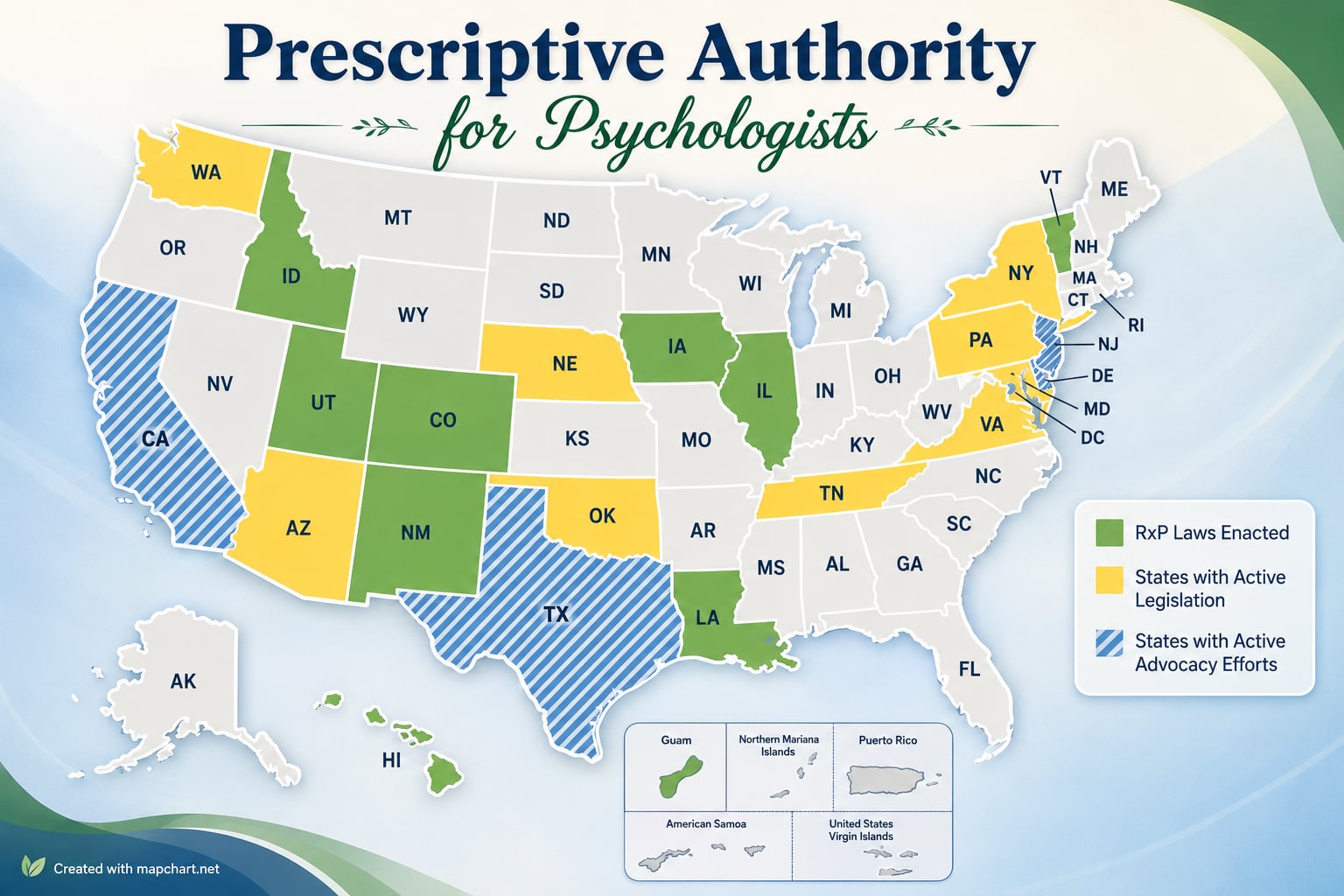
As of April 2026, prescribing psychologists are licensed to treat patients in:
-
Colorado
-
Idaho
-
Illinois
-
Iowa
-
Louisiana
-
New Mexico
-
Utah
-
Guam
- Hawaii
- The Department of Defense (DoD)
-
The Indian Health Service (IHS)
-
The Public Health Service (USPHS)
Additionally, several other states currently have active legislative proposals under consideration that would grant prescriptive authority to psychologists.
These jurisdictional statuses are subject to change. For a full, up-to-date list, please refer to the APA RxP advocacy tracking page.
How HB1000 and SB1243 Would Improve Access Through RxP
Pennsylvania is facing a crisis of mental health access and care. This crisis has grown worse since the COVID-19 pandemic. With approximately 17% of Americans using psychiatric medications, there is an increasing demand for providers who know how to properly prescribe these medications, and the current serious shortage of psychiatrists is only expected to grow.
Additionally, primary-care and family physicians, often overextended and without specialized mental health training, are frequently responsible for prescribing medications. Difficulties with access persist for individuals residing in rural regions and for those unable to afford high-quality care.
According to the most recent data from the National Alliance on Mental Illness (NAMI):
-
20% of PA adults have a mental illness.
-
Nearly 5% of PA adults and 11% of students have thoughts of suicide.
-
1.7 million Pennsylvanians live in areas experiencing mental health care shortages.
-
97% of PA counties lack adequate access to psychiatric care for children and teens.
Requirements for Prescribing Psychologists
Prescribing psychologists undergo rigorous training and fulfill requirements that may vary by jurisdiction. In order to become a prescribing psychologist, one typically must:
- Obtain a doctoral degree in psychology.
- Complete a post-doctoral experience.
- Pass the national Examination for Professional Practice in Psychology (EPPP) and the PA state licensing exam.
- Complete a Master's in Psychopharmacology.
- Pass the national Psychopharmacology Examination for Psychologists (PEP).
- Complete a supervised experience under the supervision of a prescribing psychologist or physician.
Why PPA Supports RxP
There are several benefits to having prescribing psychologists:
- Enhanced access: Prescribing psychologists can increase access to care, especially for patients in underserved or rural areas and for Medicaid and Medicare populations where permitted by program policy.
- Reduced suicide rates: Prescriptive authority for psychologists may help reduce suicide rates by expanding access to care.
- Deprescribing medication: In addition to prescribing medication, prescribing psychologists can deprescribe intelligently, weaning patients off unnecessary medicines while introducing healthier behaviors.
- Proven success: Available data suggest that psychologists who prescribe have been effective and safe in their roles, with over 30 years’ experience in select states.
Help PPA Improve Care Access by Advocating for RxP
All Pennsylvanians deserve access to comprehensive mental health services, including access to psychotropic medications. Please support the RxP movement in Pennsylvania. You can get involved by contacting your legislators and asking them to support HB1000 and SB 1243.
If you would like to get even more involved in our efforts, join our RxP Committee by contacting Rachael Baturin at Rachael@papsy.org.